

Coffee blends offer balance, consistency and flexibility for cafés and everyday coffee drinkers. A single origin can be spectacular, but it changes with every harvest and rarely does everything a busy bar needs. A blend is designed: each component is chosen for a job — body, sweetness, acidity, crema — and the recipe is adjusted so the result stays the same even when the underlying lots change. This article explains why blends dominate café menus and daily brewing, and how a blend is developed and locked.
Balance and consistency
By combining beans from different origins or species, a roaster can build a cup that is rounder than any single component: the chocolatey weight of a low-grown Java, the fruit of a natural Gayo, the brightness of a washed high-grown lot. Just as important, a blend can absorb change. When one origin’s new crop tastes different, the roaster adjusts the ratio rather than changing the product. For a café that promises the same flat white every day, that stability is worth more than any single flavour note.
Why milk drinks favour blends
Cappuccino, latte, iced coffee milk and the sweet milk coffees popular across Southeast Asia all dilute the espresso with milk and sugar. A delicate, acidic single origin can disappear in that cup. Blends built for milk lean on body and sweetness, often with a Robusta share that adds crema, weight and a little bitterness to cut through the milk. Common ratios range from 100% Arabica for a softer, more aromatic cup to 70/30, 50/50 or 30/70 Arabica-to-Robusta as the drink gets stronger and sweeter — and 100% Robusta for the boldest traditional styles.
Cost stability
Green coffee prices move with the harvest and the market. A blend gives the roaster room to protect the buyer’s price: if one component becomes expensive, a similar lot can be substituted and the recipe re-cupped, without changing the product on the menu. That is why most house espressos, retail bags and instant coffees are blends rather than single origins.
How a custom blend is developed
- Brief. The drinks the coffee is for, the equipment it will be brewed on, the market and the target price.
- Samples. Two or three candidate recipes are roasted and cupped, on their own and in the drinks they are meant for.
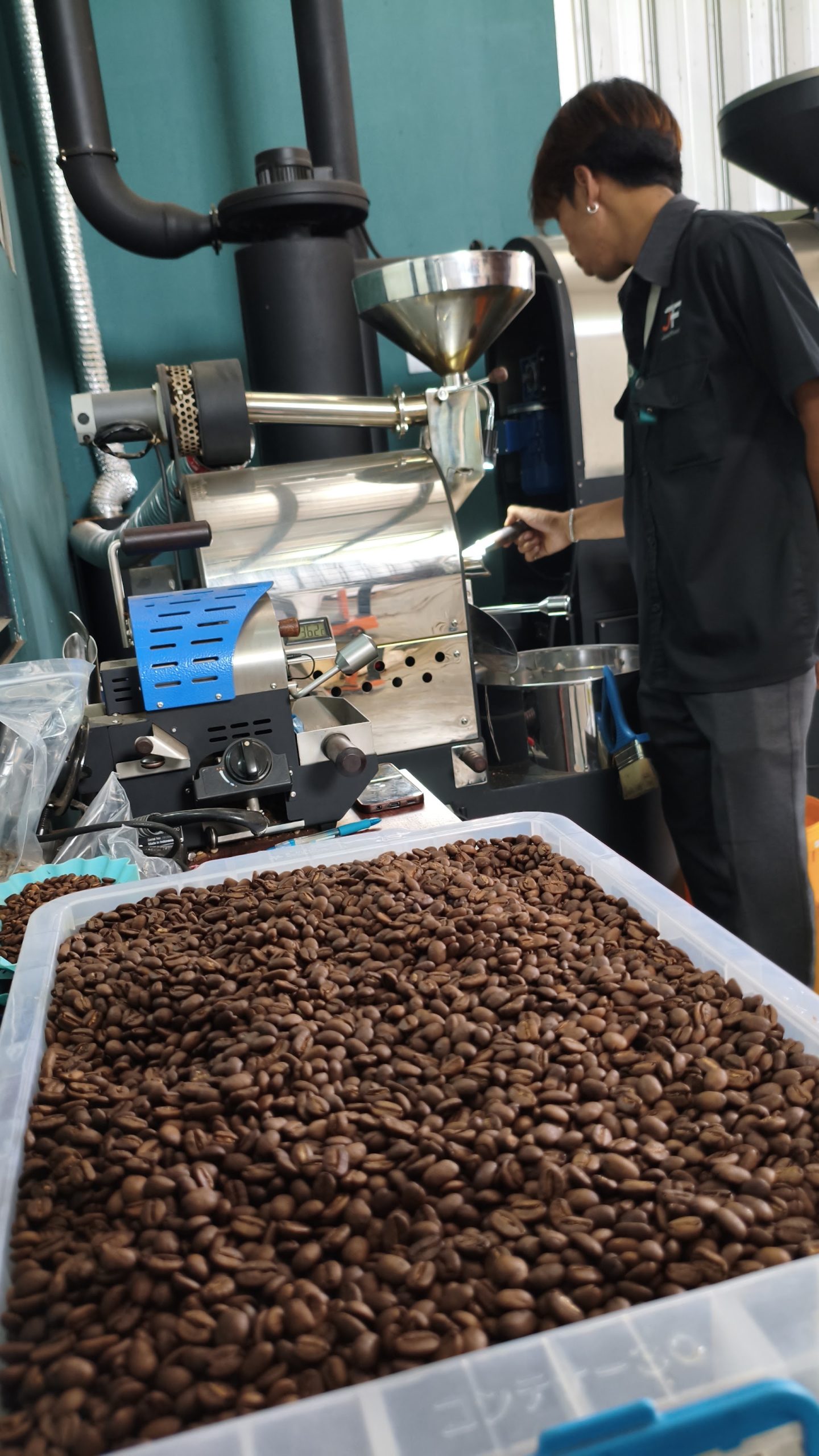
- Lock. The recipe and roast profile — charge temperature, development, drop — are written down and signed off. From this point every batch is roasted to the record.
- Reorder. The profile stays on file, so repeat orders go straight to production and taste like the first run.
Blends from Jaad
Our retail brand, Jaad Coffee, sells a Barista Blend series in Indonesia with five Arabica-to-Robusta ratios — 100/0, 70/30, 50/50, 30/70 and 100% Robusta — alongside an Espresso House Blend line, so a café can taste exactly how the ratio changes the cup before committing to one. You can see the range at jaadcoffee.com.
For wholesale and export buyers, the same roastery develops custom blends under our private label and contract roasting programme: a recipe developed and cupped with you, then locked so every reorder matches, from 150 kg with a 21–25-working-day lead time. Our developed espresso and house blends are also available as white label from 30 kg. Every blend is roasted in Bandung to a documented profile, with the roast date printed on the batch and export documents prepared alongside production.
Tell us the drinks you serve and the market you serve them in, and we will propose a blend. Send the brief, or read about what cafés, retailers and online brands need from roasted coffee.